MenuReserve My Seat At The Workshop
Edward Collins
JD · CFP® · AAMS · RFC
Most high-income earners think insurance exists to make them feel safe. That misunderstanding is exactly why their asset protection plans fail under pressure. Insurance is not comfort ... it’s controlled risk transfer. In this article, we dismantle the consumer mindset around ins

If you’re building real wealth … businesses, real estate, investments, intellectual property … you are also accumulating exposure.
More assets attract more attention. More success invites more scrutiny. And eventually, more risk shows up at your door whether you planned for it or not.
Most people believe asset protection begins with entities or trusts. That belief is backwards.
Courts don’t test your LLC first. They test your insurance. If that layer fails, everything behind it becomes fair game.
Understanding where insurance actually sits … and how it’s meant to function … is the difference between a fortress and a facade.

Courts don’t care how smart your structure is if you are underinsured.
Edward Collins
Insurance has been marketed as emotional comfort.
“Sleep better.”
“Feel protected.”
“Peace of mind.”
That framing is dangerous …
Insurance is not emotional. It’s mathematical. It’s legal. It’s strategic.
Insurance exists to transfer risk away from your balance sheet and into a contract governed by statute, precedent, and policy language. Nothing more. Nothing less.
When you treat insurance as a feeling, you buy it casually.
When you treat it as strategy, you architect it deliberately.
And the difference between those two purchases doesn’t reveal itself at the point of sale. It reveals itself on the worst day of your professional life.
Asset protection is not a product. It’s a system.
Think in layers:
Insurance is not the last line of defense.
It is the first wall of the fortress.
If that wall cracks, every structure behind it gets stress-tested … in public, on someone else’s timeline, under rules you no longer control.
Insurance absorbs the shock.
Entities contain the damage.
Trusts preserve the capital.
This is not about selling policies.
It’s about understanding intent.
A couple of weeks ago, I met with my Uplevel Protégé Members for an entire Protégé Lab on Risk Mitigation and Insurance Planning. These are the policy types we worked through …
Liability insurance exists for one reason:
to keep a plaintiff’s attorney from ever reaching your assets.
This includes:
The most common failure? Coverage caps that don’t match net worth … and exclusions that quietly carve out the very risks your life creates.
Both failures share a root cause. The policy was sized for the person you were when you bought it, not the person your balance sheet says you are now.
An umbrella is not a replacement.
It’s a multiplier.
Umbrella coverage expands the shield above your base policies and gives you negotiating leverage long before a case ever reaches trial.
Treating umbrella limits as arbitrary numbers instead of exposure-based decisions is one of the most expensive mistakes high earners make.
Property insurance protects inputs, not ownership.
Real estate, equipment, specialty assets … these policies exist so the engine keeps running after impact.
Overinsure the replaceable assets and underinsure the income-producing ones, and you’ve reversed the logic entirely.
A business that can’t operate is an uninsured liability waiting to happen.
Key person coverage, business interruption, disability-related income replacement … these protect cash flow continuity, not feelings.
With no continuity plan, one injury, illness, or disruption can turn a profitable operation into a plaintiff magnet.
Captive insurance, specialty risk pools, and non-obvious risk policies belong at step five, not step one.
Advanced insurance only works after discipline, operations, and structure are already in place. Sequencing is not a technicality here. It is the whole point.

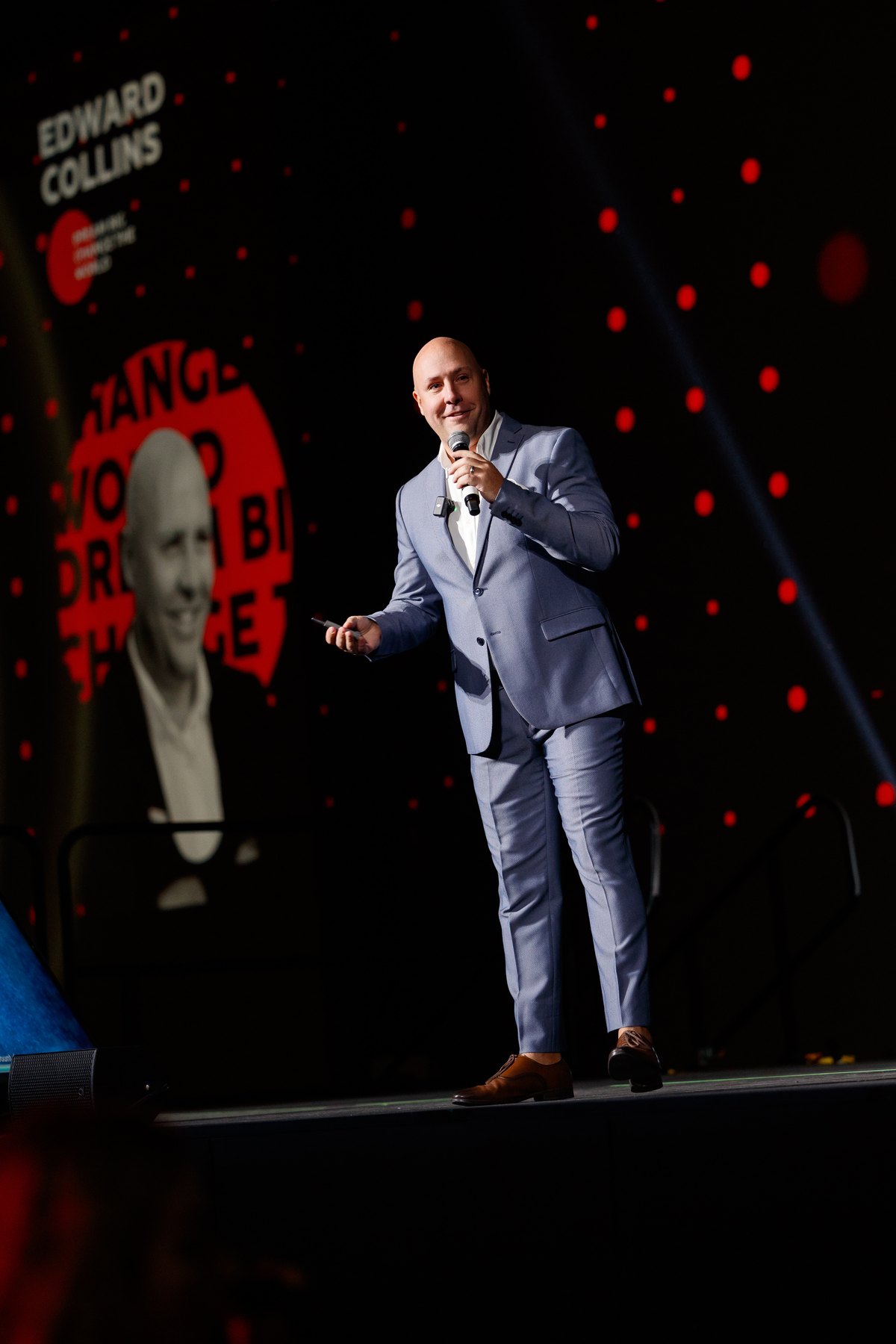
Edward Collins sharing nuggets of wisdom with the audience.

Walking Members through advanced wealth protection strategies, including Risk Mitigation.
Or worse … assuming “standard coverage” applies to a non-standard life.
Notice what all three have in common. Not one of them is a pricing problem. Every one of them is a coordination problem … which is precisely why they survive years of annual renewals without ever being caught.
Insurance bought without strategy is just expensive hope.
The right insurance question is never:
“What policy should I buy?”
It’s:
“What risk am I intentionally transferring … and what risk am I consciously retaining?”
That question upgrades every conversation with an advisor, broker, or carrier instantly … because it moves you from shopping to designing.
You don’t need a new policy to run this. You need the ones you already own, and four honest answers.
Four questions. None of them require a purchase.
All of them require an inventory … and the gap between those two is where most asset protection plans quietly fail.
Most asset protection failures don’t happen because someone lacked intelligence.
They happen because the foundation was weak.
Insurance is not about peace of mind.
It’s about keeping lawsuits shallow, claims contained, and capital untouched.
A fortress doesn’t rely on vibes.
It relies on structure.
And structure … done right … buys freedom.

Subscribe and the rest of this issue opens now … plus the full archive, and next Tuesday’s issue in your inbox.
Free · Weekly on Tuesdays · 11,000+ readers · Unsubscribe anytime
The Uplevel Community … our online education community for self-made business owners.
Join The CommunityUplevel University … group coaching and education across the Four Pillars of the Real Wealth Matrix.
Explore Uplevel UniversityUplevel Protégé … our 1:1 consulting program, by invitation. Raise your hand and we’ll review your situation.
See If You QualifyWeekly, on Tuesday morning … one concept, taught so you can act on it. No noise, no filler.
Subscribe To Freedom Has A Framework